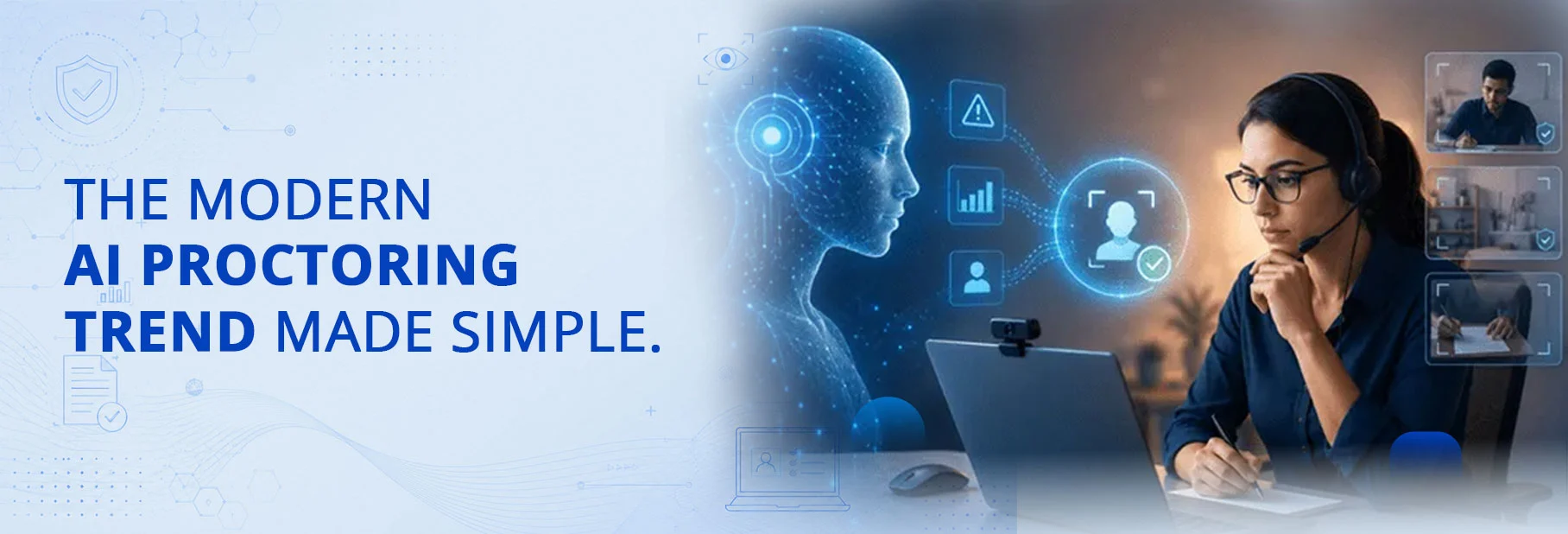
Smart, Not Scary: The Modern AI Proctoring Trend Making Online Exams Fair.
Imagine sitting down for an online test from the comfort of your room, only to feel like a high tech security guard is staring unblinkingly at your face. For a long time, that is exactly what online test monitoring felt like.
But things are changing fast. The market for secure digital testing is booming. The global automated online proctoring market size is projected to grow from $1,147 million to a massive $2,176 million by 2031, according to the latest research from Infinity Market Research. Meanwhile, long term projections by Market Growth Reports estimate that the broader remote proctoring solutions sector will soar to $4,369.44 million by 2035.
As schools and businesses permanently shift their evaluations online, the technology behind them is getting a major upgrade. The latest AI proctoring trend is shifting away from aggressive "spying" and moving toward a smarter, more balanced approach that simply protects the value of a hard earned degree or professional certificate.
Here is a simple look at the major shifts transforming how online tests work today.
1. Goodbye False Alarms, Hello Common Sense
Early versions of automated test software were notoriously strict. If you sneezed, looked out the window to think, or your cat jumped on your desk, the system would immediately flag you as a "cheater."
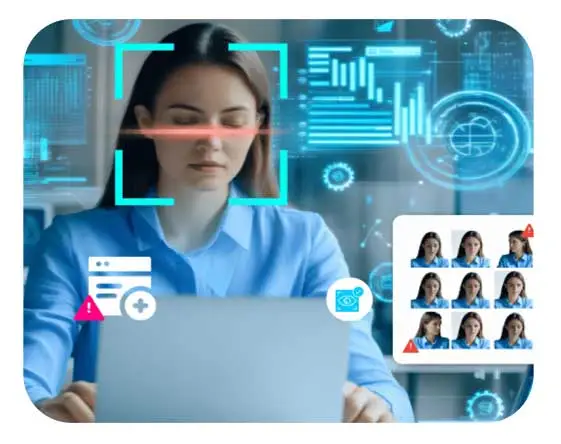
Today’s smart systems use advanced behavioural data to understand human context. Instead of panicking over a single movement, next generation AI proctoring software tracks dynamic indicators to calculate a running integrity score. According to data from Congruence Market Insights, the integration of AI based identity verification and behavioural analytics is now a core factor driving tech adoption. The AI knows the difference between a student stretching their neck and someone repeatedly looking down to read answers off a hidden smartphone. This means far fewer stressful false alarms for honest test takers.
2. Defeating the Tech Savvy Cheater: GenAI and Deepfakes
With tools like ChatGPT widely available, modern cheating has gone high tech. To protect the legitimacy of testing, the global market for specialized AI detection and verification tools is expanding rapidly, set to climb from $581.3 million to $749.8 million according to the Grand View Research AI Detector Report.
To create a level playing field, modern AI proctoring software, has introduced clever defense systems:
- Deepfake Spotters: The smartest platforms now use "liveness detection." By checking subtle skin colour variations caused by real blood flow, the software ensures the person on the webcam is a live human, completely blocking pre- recorded videos or AI generated face overlays.
- Acoustic & Environmental Auditing: Newer audio tools don't just flag random noises. They can pinpoint low frequency whispers, secondary keyboard typing rhythms, or the unique audio signature of someone using a hidden Bluetooth earpiece.
3. The "Tag Team" Approach: AI + Real Humans
No one wants a computer algorithm to be the final judge of their academic or professional career. That’s why the ultimate trend is a hybrid workflow.
The AI acts as an automated assistant. It does the heavy lifting by watching thousands of students or job applicants simultaneously and placing a quiet digital bookmark on anything unusual. A real human teacher or reviewer then looks at those bookmarked clips to make the final, fair decision. This removes the cold, automated feel of early proctoring and replaces it with reliable human supervision backed by tech.
The Takeaway
At the end of the day, the overarching AI proctoring trend focuses on balance. The goal isn't to treat every test taker like a suspect, but to make sure that when you earn a degree, pass a compliance test, or land a job, your credentials carry real, undeniable value.
Book a Demo